Did you ever wonder what makes a super spreader of the coronavirus? We had our own thoughts on the matter. That was until we discovered research at Tulane University, Harvard University, MIT and Massachusetts General Hospital. The first thing we did was explore the procedure the scientists used.
Researching What Makes a Super Spreader
The researchers used both people and nonhuman primates for their research. However, there were 194 healthy humans compared to just eight nonhuman primates with COVID-19. And we understand their symptoms would have been mild as young and healthy creatures.
The researchers discovered 20% of humans contributed 80% of particles they exhaled in breath. This 20 / 80 distribution aligns with other infectious disease epidemics. Health authorities could use the information that follows to fine tune their preventative measures.
Key Points to Take Away and Mull Over
1… The density of particles exhaled from infected nonhuman primates increased as their illness progressed. And it peaked after a week, before reaching a mere micron by the end of the second week. This applied equally to asymptomatic cases.
2… Mucous particles from healthy people spread as they breathed, talked or coughed. Tiny ones stayed afloat longer, traveled further through the air, and penetrated deeper when other people breathed them in.
That much we largely already knew. However, when it comes to what makes a super spreader we were in for a surprise. Obesity, age and COVID-19 infection correlate with a propensity to breathe out more, smaller respiratory droplets.
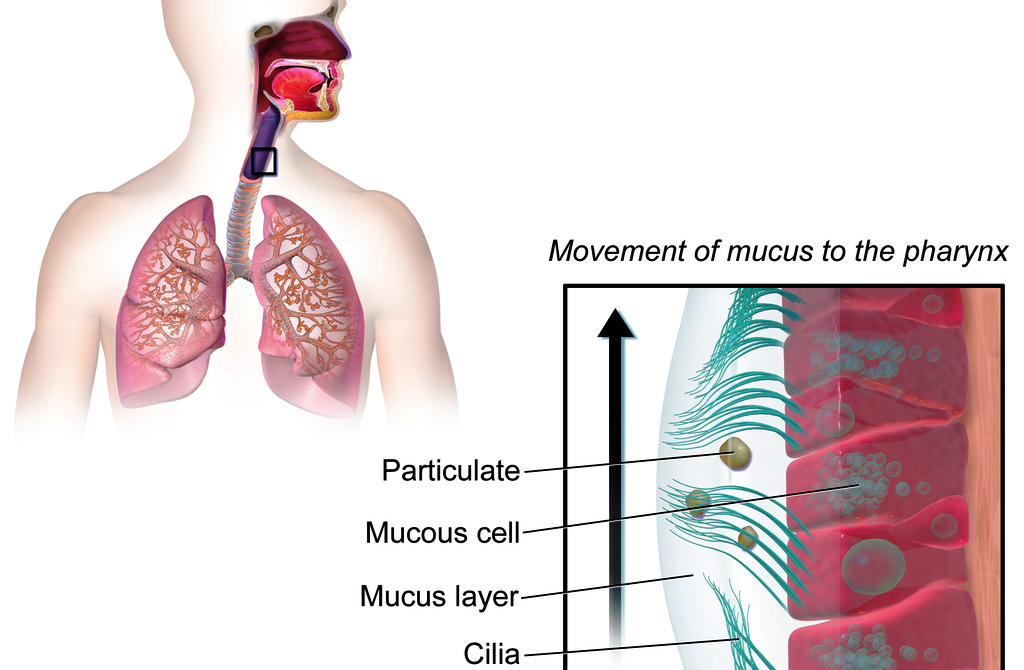
Could that be because older people put on more weight, and generally become sicker with the disease? The research report suggests otherwise. It says higher body-mass-index multiplied by age makes airway lining mucus more likely to break up, and expel as smaller particles.
Related
Airborne Transmission in Enclosed Settings
COVID-19 Spread via Contacts and Droplets
Preview Image: Mucus in the Respiratory System