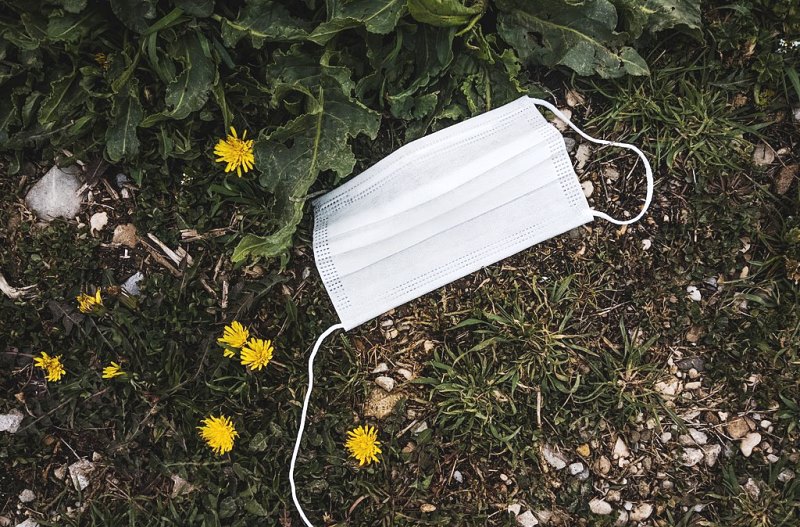
No, this is not a get-rich-quick-scheme to recover electrostatic energy from your soiled KN95 face mask. It is something else. Scientists at National University of Science and Technology in Russia say they can up-cycle face masks to batteries good as lithium. Now we know there’s energy left over in your face mask where do we go from here?
Recovering the Energy Left Over in Your Face Mask
There’s a huge pile of used personal protective equipment we need to recycle. Especially given the New Atlas estimate we used 129 billion face masks globally every month during the initial phases of the pandemic. The focus had been on using them as road materials. However, we are more interested in a report they make fairly respectable batteries.
The Russian scientists teamed with United States and Mexican colleagues to disinfect used face masks with ultrasound. And then they dipped them in an ink they made from graphene. Then they compressed the result, and heated it to 140 °C (284 °F) producing battery electrode pellets.
But How Good Were the Face Mask Electrodes Really?
Well first of all the pellets needed more doing to them as follows:
1… Separate the pellets with an insulating layer of more old face masks.
2… Soak the collection in an electrolyte liquid – they don’t reveal which.
3… Wrap the final product in a protective shell of used drug blister packs.
The researchers claim an energy density of 99.7 watt-hours per kilogram, approaching the threshold of lithium-ion batteries. However, this increased when they added nano particles of calcium-cobalt oxide perovskite to the electrodes. In fact it was as good as a half-decent lithium battery.
So you see there really is energy left over in your face mask, although not quite as you may have imagined from our title. We could not resist the temptation to spice up our story and add some fun to our day.
Recent Posts
Electrostatic Charged Face Mask Hygiene
A Battery Fit for Sweltering Australian Outback
Preview Image: Abandoned Protective Face Mask