King Abdullah University of Science and Technology, and King Abdulaziz City for Science and Technology researchers, have made a discovery. The Saudi Arabian team have found that nylon boosts lithium solid state battery performance. This comes as a refreshing surprise, compared to the more complex suggestions of some of their colleagues elsewhere.
Boosting Solid Lithium Battery Power With Nylon
The Eurekalert journal of American Association for the Advancement of Science, explains the current drawbacks of solid lithium metal batteries. These failings include ‘parasitic side reactions’, that prevent them achieving their full potential.
It is, however, possible to stabilize these batteries at their interface points, and improve their performance, using additives in both cases. In this regard, the King Abdullah University of Science and Technology (KAUST) team have found that a common polymer can achieve this purpose.
This polymer, that you are probably wearing, is nylon common in clothing. American company DuPont popularized this family of cellulose-based fibers in 1939, with the release of rayon which lead to the invention of nylon stockings.
Nylon Turns Over a Solid Leaf With Batteries
The Saudi Arabians may have taken this ‘wonder material’ to new heights, by demonstrating how nylon streamlines lithium solid state chemistry too. They achieved this breakthrough, after they dissolved a nylon polymer in a mild lithium electrolyte solution.
Adding this solution to a lithium metal battery reduced the number of adverse parasitic reactions. This in turn made the battery more efficient, with a longer life span taking it closer to optimum performance.
“Polymers have always been difficult to dissolve in common battery electrolytes”, a postdoctoral KAUST team member scientist explains. “We did an intensive study of the chemical properties, and modified the solvation structure and interactions” to achieve our goal this time.
More Information
Thin-Film Coatings on Solid State Batteries
Reducing Resistance in Solid State Batteries
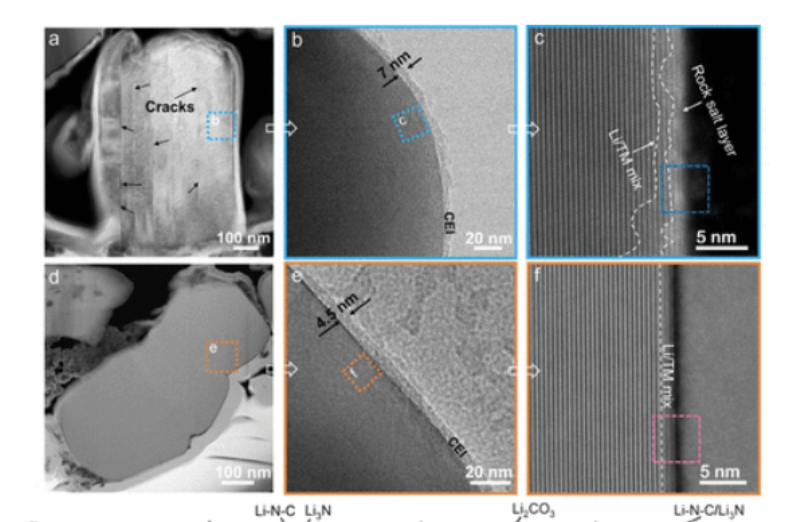
Preview Image: Improved Cathode Integrity