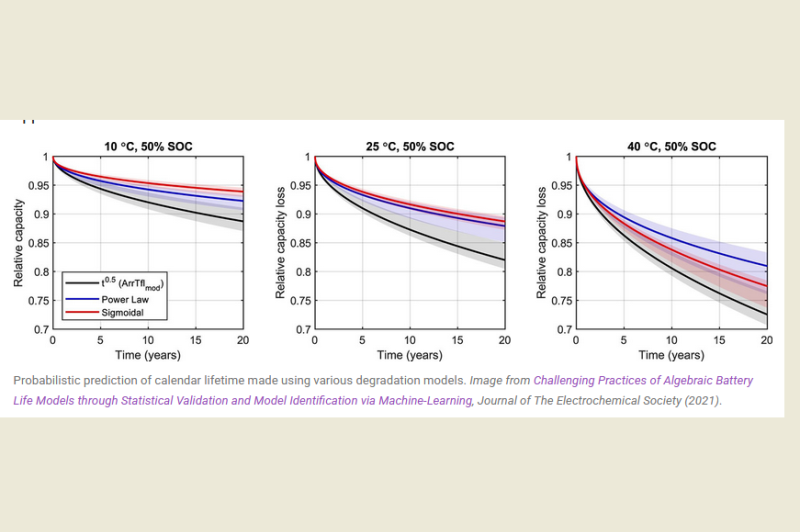
Electric vehicle battery degradation / deterioration is the gradual loss of battery capacity over time. The primary causes are time passing and the nature of lithium-ion chemistry. There is a sharper dip in capacity in the beginning, after which the rate of loss is slower and steadier.
Early forecasts of electric vehicle calendar life, assumed the rate of dip in the beginning would continue. This created the impression that electric vehicles were bad investments. This has not proved true, as a report by GeoLab confirms in a link below.
Key Insights Into Electric Vehicle Battery Degradation
GeoLab analyzed battery degradation in more than 22,700 electric vehicles during 2025, including 21 different models. They concluded that electric vehicle batteries should outlast the vehicle’s service life, as follows:
- The average electric vehicle battery degradation rate is 2.3% overall.
- High power fast DC charging (>100kW) degrades batteries at 3.0%.
- But the rate is 1.5% in the case of conventional low power charging.
- Vehicle batteries operating under hot conditions degrade 0.4% faster.
GeoLab notes that these deterioration rates are higher with frequently used vehicles, although better ROI returns could offset this.
High and low states of charge therefore have less effect than early predictions. GeoLab found that these really only impact electric vehicle battery degradation, when batteries are almost full or almost empty 80% of the time.
More Detail in This Battery Degradation Update
Thus far we have summarized the average trends in GeoLab’s report. Here are a few interesting details to round off our summary:
- Light electric car batteries degrade at an average 2.0%. Whereas multi-purpose vehicles lose 2.7% capacity annually. This difference may be due to their chemistries targeting energy density, as opposed to calendar life.
- Many electric vehicle batteries display a sharp drop in capacity in the first one-to-two years, before this levels out. The current data includes a higher proportion of new electric vehicles.
However, and this is intriguing, vehicles in Geolab’s 2023 data set have an average deterioration rate of just 1.4%. This suggests electric vehicle battery degradation is slower than we may have previously expected.
More Information
Degradation Drivers in Lithium-Ion Batteries
Lithium Nickel Oxide Degradation Discovery