A team of scientists at New Jersey Institute of Technology (NJIT) have used artificial intelligence to predict future battery materials. This is a critical step to developing viable alternatives to lithium-ion batteries. We are delighted to confirm, that AI identified candidate materials for batteries during this research. Although we should mention that the base materials have always been there.
Why Do We Need These New Materials for Batteries?
Lithium-ion batteries rely on lithium-ions, that each carry a single positive charge. This limits how much energy these batteries can store. And therefore, how far the technology can take us on our journey towards a circular economy.
However, if we could develop alternative ‘multivalent-ion’ batteries (that use multiple, not single ions) then these materials could store more energy. Wikipedia mentions magnesium, calcium, zinc, and aluminum as possible contenders.
But implementing these ideas in practice has encountered obstacles. The ions in these promising materials are larger than their lithium ion counterparts. Managing the greater multivalent electrical charge has also challenged developers.
“One of the biggest hurdles wasn’t a lack of promising battery chemistries,” explains lead researcher Prof Dibakar Datta. “It was the sheer impossibility of testing millions of material combinations.”
NJIT Researchers Turn to Artificial Intelligence for Candidates
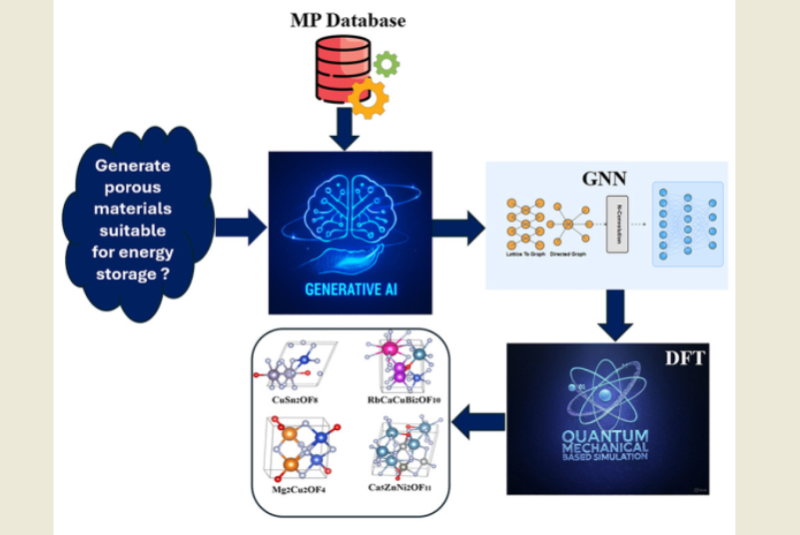
“We turned to generative AI as a fast, systematic way to sift through that vast landscape,” the Prof continues. “It enabled us to spot the few structures that could truly make multivalent batteries practical.”
AI was up to the challenge as it rapidly explored thousands of possibilities, at a rate the human mind could never achieve. However, the NJIT team first had to develop new tools, and train artificial intelligence to identify candidate materials for batteries effectively.
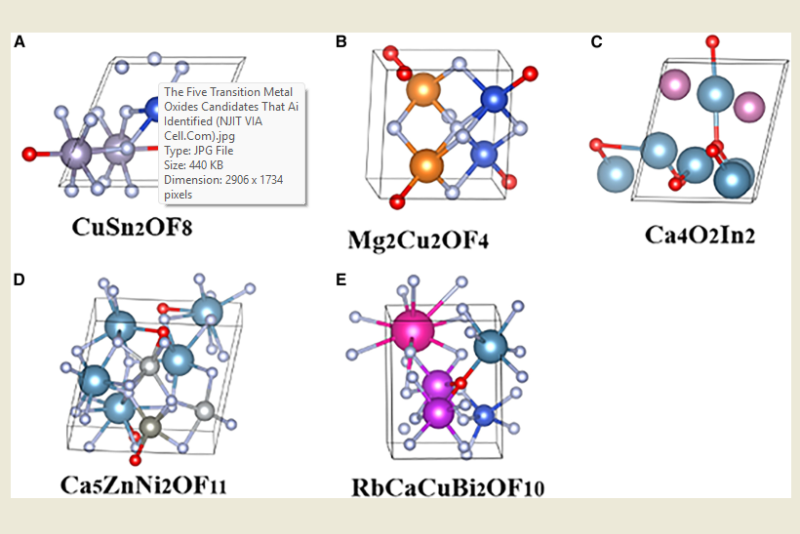
This human-machine combination exposed five entirely new porous transition metal oxide structures. “These have large open channels,” the report explains. This sounds like a critical breakthrough for moving large, multivalent ions rapidly and safely, after AI identified these candidate materials for batteries successfully.
More Information
Batteries and Artificial Intelligence For Synergy
Artificial Intelligence And Battery Electrolyte
Preview Image: Generating AI-Based Research
Announcement by New Jersey Institute of Technology