Looking back at battery history we realize how slow-moving battery research really is. Gaston Planté invented the lead battery in 1859. Carl Gassner produced the first zinc-carbon cell in 1886, while nickel-cadmium only went commercial in 1910. However, not much else happened until the first lithium batteries appeared in supermarkets in the 1970’s. Researchers at Stanford have demonstrated battery research with machines could be faster.
Short Circuiting Battery Research Using Machines
Many of humankind’s greatest inventions came from years of research by numerous scientists. However, others appear to have been flashes of inspiration. Computers appeared at the end of the scientific version of a 7-day camel hike.
We have now reached the point where their artificial intelligence is faster than our own. Moreover, advanced computers can out-think humans in terms of speed and do multiple, simultaneous calculations. Researchers at Stanford have been doing battery research with machines and have had some success. They asked their computer to confirm a method for faster battery charging without shortening design life.
Could a Computer Reveal the Ideal Charging Method?
California’s drive for carbon-free electricity by 2045, is adding fresh impetus to the search for better batteries at Stanford. The current human method involves testing new ideas with repeat charging / discharging cycles thousands of times. The Stanford scientists fed ‘training data’ from past battery experiments into their computer. This taught it to accurately predict the results of prior battery research after only a hundred cycles.
However, the researchers are not convinced battery research with machines would work that well with new battery designs. That’s because computers do not yet have the gift of human perception. That said anything that can get us to a zero-carbon economy is very important, especially because the global warming clock is ticking faster. If we don’t make radical progress soon, then we may find the world around us permanently different.
Related
The First Rechargeable Batteries Were Lead
John Goodenough’s Solid State Battery Breakthrough
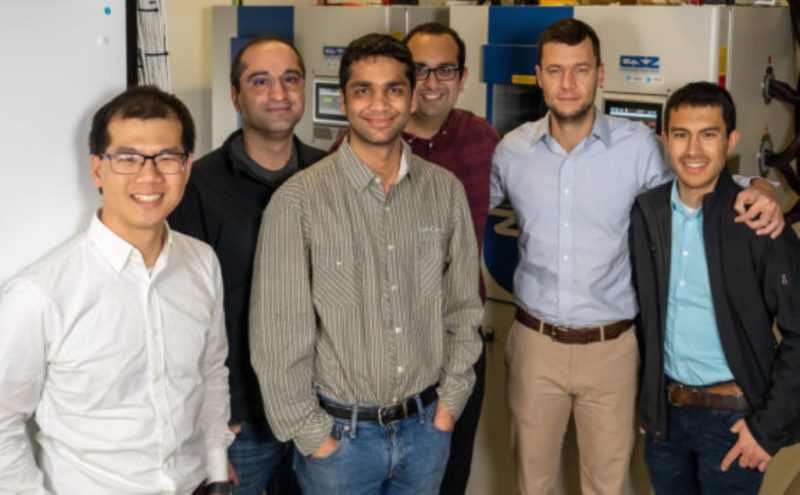
Preview Image: Research Team at Stanford
Video Share Link: https://youtu.be/ZlYM2OyRC6g