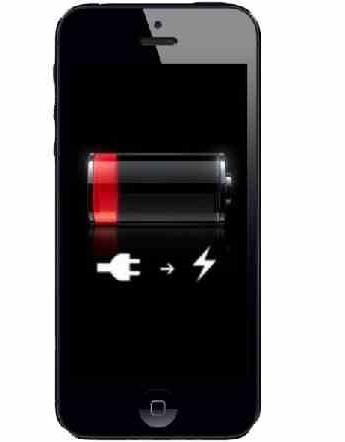
Ever since their rise in popularity, smartphones have had one very significant flaw. Battery life. This problem has lead to an entire industry of spare batteries, charge cases, mini power cables and much more. However, the underlying problem has never been solved. Why can’t we just create a battery that lasts longer?
Well, researchers at Stanford University have recently proposed a solution. In a paper published in the scientific journal Nature Nanotechnology they report they have designed a pure lithium anode with the potential of increasing the capacity of existing battery technology 400%
“Of all the materials that one might use in an anode, lithium has the greatest potential,” said Yi Cui, professor of Material Science and Engineering and the leader of the Stanford research team. “Some call it the Holy Grail. It is very lightweight and it has the highest energy density. You get more power per volume and weight, leading to lighter, smaller batteries with more power.”
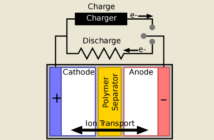
The majority of all today’s batteries are ‘Lithium Ion’ batteries, which have three main parts: an electrolyte which provides electrons, an anode which disburses the power from the electrons into the device and a cathode which receives the electrons back into the battery after they have been passed through the device’s circuit.
The problem with lithium ion batteries is that lithium is contained in the electrolyte but not the anode, making the electrons difficult to harvest efficiently. However, the Stanford researchers claim to have achieved a pure lithium anode battery which doesn’t expand and has dramatically improved charge efficiency.
Each layer has a honeycomb carbon structure which is flexible, uniform and non-reactive, which stops the lithium ions from expanding too much and the anode from reacting with the electrode.
Related articles:
Lithium Ion Batteries in Portable Electronics to Be Charged In 10 Minutes
World’s Biggest Batteries: Sendai Substation Lithium Ion Battery
Scientists Develop Cross-Linked Electrolytes To Make Lithium-Ion Batteries Safer