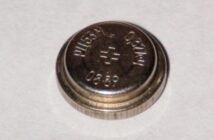
Batteries enable portable devices so we can operate independently off the grid. Although they actually existed long before electricity utilities, and predated electricity generators too. They allowed the birth of telegraphs, and telephones as they evolved. Nowadays, they are indispensable for portable computers, mobile phones, and electric cars. Would you like to know how the history of batteries began?
The History of Batteries Begins With Open Jars
Our story begins with the world’s first capacitors, Leyden jars. These were able to store electricity, although they released all of this in an instant when activated. But in 1791 an Italian scientist Alessandro Volta followed a different tack that lead to the world’s first battery. However, he in turn built on observations his pal Luigi Galvani had made earlier.
Volta surmised ‘electrical phenomena’ would occur if he sandwiched a moist intermediary material between two different metals. He proved his theory through a number of experiments. So we can say the history of batteries began with Alessandro Volta. In 1873, two British scientists coined the name ‘volt’ for the unit of resistance in his honor.
In 1800, Volta refined his ideas in the form of the now famous voltaic pile. This stored and released a charge through a chemical reaction. But it was also the first collection of battery cells joined together in series. And those pairs of copper and zinc disks with moist material between, constituted the first electrodes and electrolyte in the history of science.
However the Battery Science Needed to Catch Up
But Alessandro Volta did not fully understand how his device worked. He mistakenly believed the current was the result of two different materials simply touching each other. Later he expanded his model by creating a ‘crown of cups’, meaning a circle of alternating metal discs in a saltwater solution.
Breaking News
Voltage Current Power and Capacity
The Secret Battery Manager Electrolyte