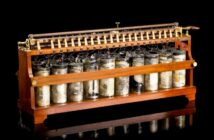
William Nicholson and Anthony Carlisle were pioneering scientists in England at the dawn of the 19th Century. They discovered electrolysis almost by accident while experimenting with a replica they made of Alessandro’s Volta’s voltaic pile battery. Since then, electrolysis became a fundamental tool for separating elements from naturally occurring sources. Read on to discover how Nicholson and Carlisle discover electrolysis, and kick start the revolutionary idea.
More About Nicholson and Carlisle’s Electrolysis Discovery
William Nicholson was an English writer, translator, publisher, scientist, inventor, patent agent, and civil engineer. He published the first monthly scientific journal in Britain, invented a constant-volume hydrometer, and obtained a patent for a cylindrical printing machine.
Anthony Carlisle was an English surgeon and member of the Royal College of Surgeons. He twice delivered their annual Hunterian Ovation, and became Surgeon General to King George IV, who knighted him.
Nicholson and Carlisle met, and became friends at the beginning of the 18th Century. They built a replica of the voltaic pile in 1800, and experimented with immersing the electrical leads in water. They noticed this procedure released separate bubbles of hydrogen and oxygen. And that in a nut shell is what made Nicholson and Carlisle discover electrolysis.
What Does This Have to Do with Batteries?
That’s a fair question, because this blog is about everything to do with batteries. William Nicholson and Anthony Carlisle’s original experiment separated oxygen and hydrogen from naturally occurring water. Hydrogen is a limitless source of alternative renewable energy. In fact, the gas has become a component of some energy storage systems.
Hydrogen fuel cells are already generating energy using a chemical reaction. This clean form of stored energy is also capable of reproducing itself from water. Some pundits believe that hydrogen will become the leading source of energy in future. We decided that was sufficient reason to write it up, for our blog covering everything to do with batteries.
More Information
Splitting Water Using Electrolysis
Hydrogen Fuel Cell Basics How They Work
Preview Image: Electrolysis Down the Ages