Battery recycling has become even more important, as electric vehicles, smartphones, and energy storage systems reach their end of lives. We discuss the impact of fluorine on battery recycling, and how this has become a challenge.
Fluorine plays a role in many battery protective coatings and electrolytes, because it improves their performance and lifespan. It is generally safe inside sealed battery cases. However, compounds containing fluorine can become dangerous if batteries catch alight or are improperly recycled.
Battery Recycling And The Green Economy
Recycling helps recover valuable materials such as lithium, nickel, cobalt, copper, and graphite for reuse. It also keeps potentially harmful substances out of landfills, and lowers the environmental impact of battery production.
Fluorine is under increasing focus in this context. We hear less about it than lithium or cobalt, although it plays an important role in many modern batteries. For example, fluorine is present in electrolyte salts and binder materials in lithium-ion batteries.
Increasing amounts of highly-reactive fluorine have become a challenge for battery recycling companies. These often focus on recovering valuable metals, and treat fluorine as waste.
Neglected compounds containing fluorine can create environmental concerns down the line. To complicate matters further, high-temperature recycling can generate fluorine-containing gases that require careful treatment.
Recovering Fluorine-Containing Materials During Recycling
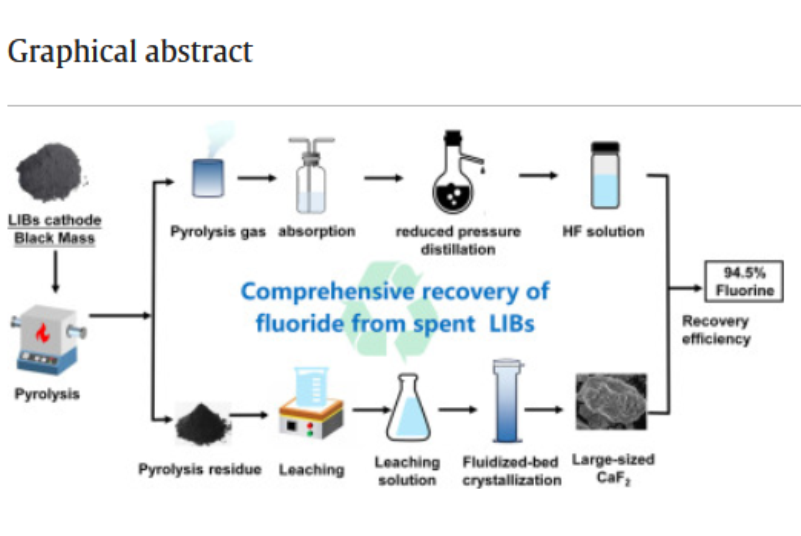
Researchers at several universities in China, recently surveyed methods for recovering fluorine-containing materials in lithium-ion batteries. They established what happened to these during various recycling processes, and developed a method to capture and reclaim the fluorine.
This research is important in the context of recycling all spent battery materials, instead of allowing some to end up in waste streams. Lithium-ion batteries play an important role in the emerging green economy.
However, if they end up polluting our environment, then this runs contrary to our greater goal. Recovering fluorine during lithium-ion battery recycling has been neglected in the past, but thankfully this is changing.
More Information
Fluorine Atoms Fix Sodium-Ion Batteries
Smart Recycling of Old Batteries