

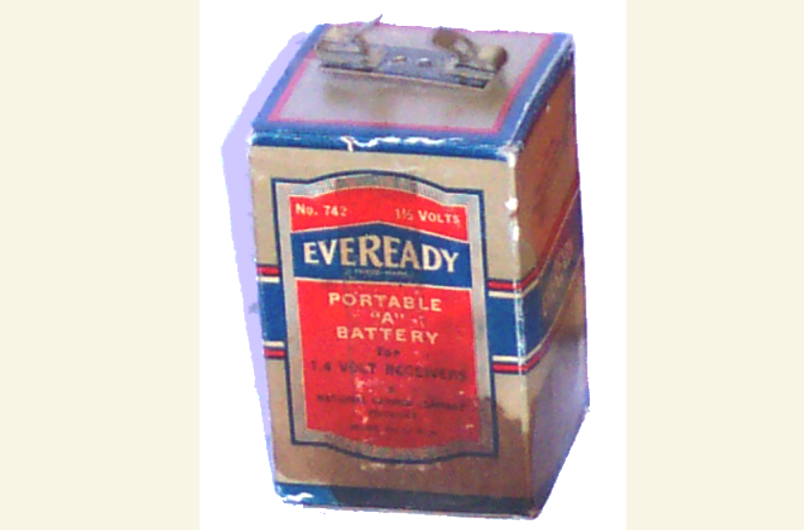
Electronic circuits in radios and television sets were bulkier before the fully electronic era arrived. Old timers among us may still remember the flickering vacuum tubes that managed current flow in early devices. Power had to come from somewhere to power the process. The vacuum tube batteries supplying the energy are a quaint reminder of how things once were.
Pairs of Vacuum Tube Batteries Recall the Past
The earliest vacuum tubes comprised two components. These were a cathode filament, and an anode plate. To simplify matters, engineers designated them electrode ‘A’ and ‘B’ according to where they were in the circuit.
Each of these electrodes received power from separate vacuum tube batteries. We can’t say why this was the case, although it does suggest vacuum tubes were energy hungry. The engineers designated the batteries ‘A’ and ‘B’ too, presumably to avoid confusion.
Then they added a third element to the tubes as the technology evolved. This was a control grid managing the electron flow between the cathode filament, and anode plate. They designated this ‘C’ and its associated battery ‘C’ to match.
So Much for Vacuum Tubes. What About the Batteries?
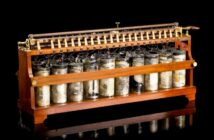
Chem Europe informs us that early ‘A’ batteries were two-volt, rechargeable lead-acid types. They were the ‘primary heat source’ supplying the filament, and discharged rapidly. Where the ‘B’ batteries were dry, non-rechargeable, presumably alkaline types with low current draw from the plate, and longer life.
The subsequent ‘C’ batteries providing bias to the control grid appear to have also been dry, non-rechargeable, presumably alkaline types. We’re not surprised they used the ABC system to make sense of all this. It must have been confusing for the poor users changing their batteries!
More Information
A Longer Battery Life for Your Phone

1 Comment
Hi Richard, when I was a kid in the late 50s, we lived in a house in Cornwall UK that had no mains power and for a birthday present I received a battery valve radio. I remember that the battery had a special socket with 4 connectors and since the plug from the radio would only fit one way it was impossible to get them muddled, I think the HT voltage might have been 90V and the LT part was 2V although I wouldn’t swear to it, the whole was encased in cardboard so was a dry cell type. I suspect that the batteries were fairly expensive as I was forever being told off for falling asleep and leaving the radio on at night (I used to listen to Radio Luxenberg after 7pm as they started their english language pop record shows then). I also remember an earlier time when an uncle was showing off his radio that used an accumulator which was basically a glass container with an electrolite and (I think) lead plates although I have no idea how he recharged it. Thanks for prompting an old memory!