We wrote previously about the McDermitt Caldera in southeastern Oregon, and northern Nevada in the United States. In case you missed that post, this is a 28-mile by 22-mile signature of a volcanic eruption that occurred 16 million years ago. Earth.Com confirms that a lithium-clay deposit there could be worth $US 1.5 trillion. What price lithium batteries in the United States now?
What Would the Real Price of Lithium Batteries Be?
Opinions are largely divided in this remote part of our world, over what to do next. Between 20 and 40 million metric tons of lithium could make the United States one of the world’s largest lithium producers, and lower the price of local batteries.
However, extracting this resource from a 28-mile by 22-mile area could cause irreparable damage to the natural environment. “This feature is 16 million years old,” remarks at geologist at a local community college. “And we’re making decisions in a matter of years.”
The Oregon Chapter of the Sierra Club, established to protect wildlife, draws a line in the sand. They support cleaner energy, but believe drilling must not come at the expense of fragile habitats. However, priorities vary elsewhere in this ‘land of the high desert’.
Opinions Divided in This Remote Part of the World
The case for mining the resource seems obvious in some quarters. Lithium batteries are a matter of national importance, because we rely on them to power essential devices and services. Current geopolitical tensions also underline the need to manage battery material supply chains.
Lithium-clay deposits relatively close to the surface, are usually accessed by ‘shallow open pit lithium mining’, as is already happening at Thacker Pass:
- The shallow open pits there have an average depth of 300 feet, according to Lithium Americas.
- Blocks are pegged and mined in series, to enable active ongoing land reclamation.
- As each new block opens, the previous one is back-filled, and capped with topsoil.
Replanting with native plant species will be critical for the environmental success of this project. It could be a real tragedy, if alien species take hold.
So Far So Good But What About Other Stakeholders?
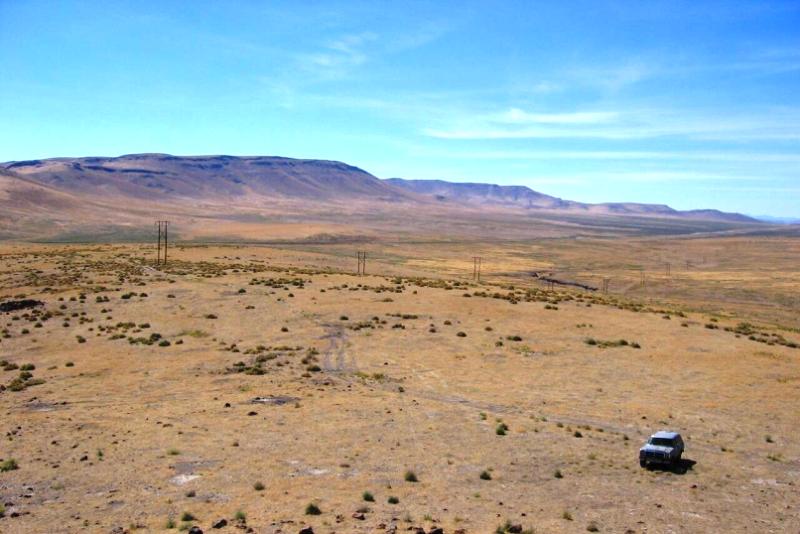
Replacing the delicate ecosystem in our photo with grassland, could have a devastating impact on mammals, birds and insects currently living there. Local tribes fear devastation of sacred spots where they still hold religious ceremonies.
We have to ask ourselves, do these things really matter? Future generations could look back at us accusingly, and say, what price lithium batteries now?
More Information
Thacker Pass Lithium Deposits Appear Vast
Lithium Extraction From Marcellus Shale