Lead batteries are so durable and reliable, we scarcely give a thought to what happens inside their solid cases. There are actually several types of them, depending on whether we need bursts of power, or reliable energy storage. We take the lid off this technology, so to speak, and peer inside to reveal what goes on in lead-acid batteries.
The Technology Inside Lead Acid Batteries
Modern lead-acid batteries – including the advanced ones we manufacture and sell – still follow the principles Wilhelm Josef Sinsteden and others established in the mid-19th century. This means they contain a series of pairs of lead-plate electrodes, in contact with a sulfuric-acid composition that serves as electrolyte.
However, this technology remained largely dormant until Werner von Siemens developed the electric generator in 1866. This made it possible to easily recharge lead-acid batteries, and so they spread out across the planet.
Since then, the technology that’s inside lead-acid batteries advanced by leaps and bounds, and continues to be one of the most important, and widely used battery technologies. Truly, it’s hard to imagine life without them.
How to Choose Lead-Acid Batteries
Lead-acid batteries continue to be in high demand, both for their long-service lives and their affordable prices. Choose a lead-acid battery that suits you, if you need reliable energy storage, or bursts of power where their high density is ideal for starting autos. However, you should not attempt to use the same version for both applications.
- Starter absorbent-glass-mat (AGM) batteries are ideal for starting gasoline motors in combustion vehicles. They deliver high energy instantly, although several attempts one-after-the-other soon start to drain them.
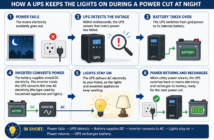
- The lead-gel batteries we manufacture and sell are cutting-edge technology for their type. You can use them for a wide range of applications, including UPS, alarm, home, garden, sport, and medical requirements.
When we consider how simple the technology is, it is almost a wonder these batteries are still with us after 170 years. Steve Jobs remarked “Simple can be harder than complex: You have to work hard to get your thinking clean to make it simple. But it’s worth it in the end…” It seems that he was right!
More Information
Lead-Acid Battery Quality Comes Of Age